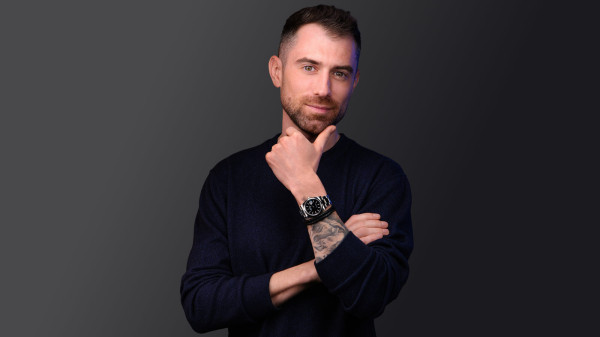
Dubai Watch Week offered an incredible opportunity to meet and interview the leaders shaping modern watchmaking, and it doesn’t get much more influential than Ilaria Resta. Famously not from a watch industry background, Audemars Piguet’s CEO arrived impeccably dressed, warm, open, and ready to speak about watchmaking with the kind of conviction that makes you lean in.
Before our conversation, I visited the AP House of Wonders – a 1,000-square-metre immersive exhibition charting Audemars Piguet’s journey from 19th-century farmers-turned-machine-makers to one of the great maisons of contemporary horology. Inside were early timepieces, design sketches, prototypes and icons, laid out as a chronological walk through the brand’s evolving creativity, culminating in the debut of the RD#5. Some journalists whispered that the pavilion’s construction reached eye-watering figures, though nothing has been officially confirmed. Given the scale and finish though, the rumour didn’t feel far-fetched.
But as Ilaria discussed with me, for AP all the show is about curating the perfect collectors’ journey.
For a collector discovering Audemars Piguet fresh, where do you think they should start? Are there key moments or references that give a good introduction to the brand?
I think when you are a new client, the most important thing is to be open and to explore. If you do not know the brand well, it is worth going through the full history rather than coming in with one fixed idea. That is why we do exhibitions and curate our boutiques the way we do, so you can see the flow of inspiration over time.
Very often people arrive with two or three models in mind, the watches they have seen in advertisements, on social media or on the wrist of friends. Then they see the breadth of calibres, shapes and colours, they try different pieces on their own wrist, and they change their mind.
That was my experience as well. The relationship with a watch happens on the wrist, not on a screen. So we encourage people to try many things, to think about how they will use the watch, day or evening, simple movement or complication. By asking those questions, people often realise they want something different from what they first imagined, which is important because it is not a small purchase.
During your talk earlier, you described watches as emotional objects. When you are creating something new, do you start from that emotional angle?
You cannot plan emotions. Emotion is the outcome when there is real passion behind a watch.
If you sit at a table and say, we have never launched this complication, let us launch it, or the trend is this colour, let us do that, then you are constructing something very rational. The emotion fades away.
For us, emotion comes from designs that people truly believe in, with some edge to them. Innovation and design are not democratic processes. If everybody contributes a little bit, you end up with something very common and predictable. So we protect the space for certain designers and watchmakers who have a strong point of view, and we give them freedom.
The second part of the emotion comes when the watch is made. When you see the hand finishing, the tiny imperfections inside the perfection, that is what lands on the wrist of the client. When clients visit the manufacture and sometimes meet the watchmaker who worked on their watch, you feel the emotion become very real. They see that it is done by hand, that it is human.

Audemars Piguet Royal Oak Jumbo Extra-Thin Selfwinding Flying Tourbillon Chronograph RD#5
The RD#5 is the first time AP has really leaned into a smartphone like haptic feel for a chronograph. Do you see user interface as a new frontier of luxury in mechanical watchmaking?
The user interface is fundamental. It is how you improve the experience for the wearer and make sure it is both rewarding and emotional.
If a watch has functions, we want people to actually use them. A perpetual calendar is not just a decoration; the date and moonphase should be correctly set and used. That is why we completely rethought the movement with a very simple crown setting system, so you do not feel intimidated by it.
The RD#5 does the same for the chronograph. It has completely changed how energy is stored and released for the chrono functions. Before, you had to push very hard on a pusher, you almost felt the shape imprinted on your fingertip because all the energy was released at once.
On the RD#5 the energy is stored and accumulated before, so the pushers feel incredibly light, intuitive and soft. There is a satisfying click yet no effort. When something is that pleasant to use, people use it more. Watches are there to be seen but also to be touched, used and to live life with you. That is when it becomes emotional.
Collectors sometimes worry that celebrities and first time luxury buyers will crowd them out at very exclusive brands. How do you balance long term enthusiasts with welcoming new clients?
This balance is critical. We have deep relationships with our collectors and long term clients. They often bring their children and families, and we help them curate their collections over time. We value that immensely.
At the same time, if we only serve existing clients, we close the door to many people who are passionate about watchmaking. So we try to keep an open door, while still caring for the people who are already with us. The journeys are different. New clients need education and explanation. Collectors usually know watchmaking very well.
That is why we do masterclasses and the AP Labs concept in different countries. We want to bring new clients in by first explaining watchmaking itself. Then they are not just buying a product, they are buying the story and the manufacturing philosophy behind it. For us, every new client joins the family. It is not a quick transaction, it is the beginning of a long relationship.

Audemars Piguet Code 11.59 Selfwinding Perpetual Calendar and Royal Oak Selfwinding Perpetual Calendar
Outside the Royal Oak, which obviously dominates the conversation, are there other families or models you would like to see get more attention?
We are extremely lucky to have an icon, and you never build an icon on purpose. You create a design you believe in, and one day it may become iconic. The Royal Oak is that for us and we will always nurture it.
But our patrimony of shapes and designs is very rich and there is room for more. The Code 11.59 is doing extremely well and speaks to a specific type of client who really loves it. We have more models coming next year, some inspired by past designs and some completely new.
We believe there is space for the icon and for the rest of the collection to grow alongside it.
Case sizing is getting more fluid, with smaller Royal Oaks worn by men and larger pieces worn by women. Do you see a future where brands move beyond gendered categories entirely?
This question is very close to my heart because I do not believe in gendered watches at all. Zero.
Not because I am making a statement, but because it simply does not make sense. No man or woman needs a watch brand to tell them what they should wear. There are preferences, of course. Some watches sell more to women, some more to men, but the majority are appreciated by both.
The old idea that small, gem set watches are for women and big complications are for men is pure bias. Society has changed; watches should follow. We see more women wearing larger watches, more men wearing smaller ones, and we design accordingly.
A few years ago we launched a chronograph with a pinkish dial and baguette stones. Everyone assumed it was for women. Men loved it. The same happened with a turquoise 37 mm piece. And large complicated watches are increasingly bought by women as well.
In our internal meetings this gendered language is banned, because we genuinely do not believe in it.

Audemars Piguet Royal Oak Concept Flying Tourbillon Tamara Ralph Limited Edition
For someone dreaming of buying their first Audemars Piguet at retail, what does that pathway look like today?
We do not produce enough to meet demand, and that is both unfortunate and, in a way, good. It is a consequence of how we manufacture. Our watches involve a huge amount of hand work, and the finishing is complex.
It goes back to our founders more than 150 years ago choosing not to fully industrialise. If you industrialise, you can produce as many watches as you want. We decided to keep many manual processes, and some things machines simply cannot replicate to the same level. That naturally limits quantity.
So when newcomers arrive, the first thing we do is explain this philosophy and our history. We build a relationship, we get them closer to the brand, and then, eventually, they will acquire a watch. It requires patience, like many beautiful things in life.
AP has become known for creative collaborations, from musicians to contemporary artists. How do you find the right people to work with?
Like many things at Audemars Piguet, it does not start in a meeting room with a checklist. We do not sit down and decide that tomorrow we must find a collaborator.
Very often these people are already friends of the brand or clients, or we are inspired by something they have created. Some relationships grow over many years. Others happen when we discover an artist or musician at an event we support and we are moved by their work and their story.
The criteria are not written down, but you feel when it is a match. You recognise similar values, generosity, creativity. Then it becomes a true collaboration, not just a contract. We share a creative process, we talk, we learn from each other. That is what matters.
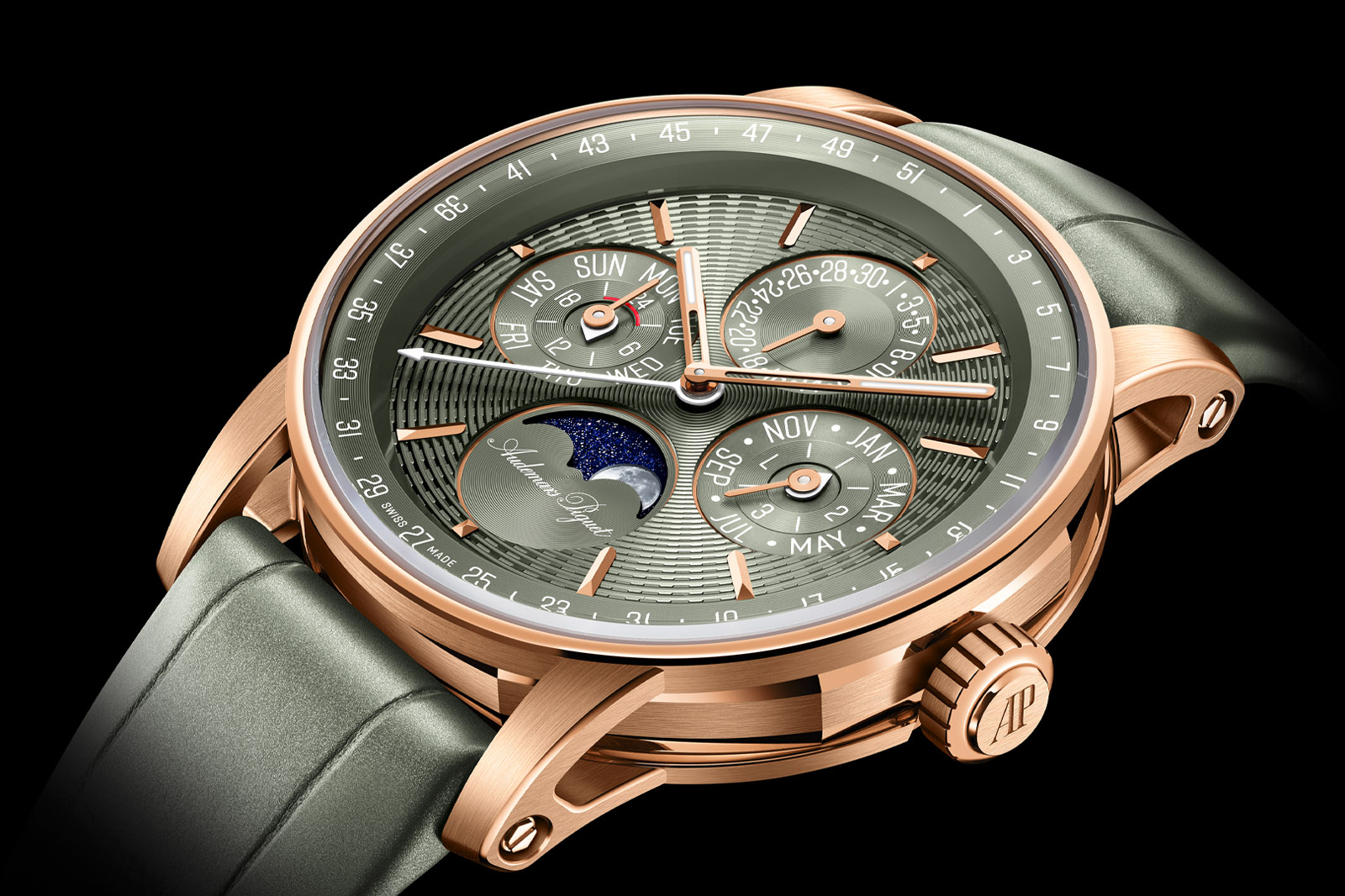
Audemars Piguet Code 11.59 Selfwinding Perpetual Calendar 38mm
Independent brands often cite Audemars Piguet as an inspiration. Is there anything the larger houses can learn from the independents and even the microbrands?
A lot.
I love walking through the aisles where independents are shown because you see such innovation, creativity and daring. They consider ideas that big brands might not simply because they are more constrained.
Independent brands make the whole watch industry more interesting. They raise the bar for all of us. That is one of the reasons we wanted to be at events where independents have a voice. It creates a true dialogue. I genuinely hope more independents come with new ideas. It is healthy for the ecosystem.
You came to AP from outside traditional watchmaking. Was there a specific AP watch that changed your understanding of the brand?
Absolutely. And this is the first time someone has asked the question like this, so thank you.
Of course I knew Audemars Piguet and the classic models, especially the Royal Oak. When I was considering the CEO role I decided to visit a boutique just as a client. No one there knew who I was or that I was connected to the brand.
I spent about two and a half hours there. The sales advisor, Julien in Geneva, did something I loved. Before bringing watches, he took out a book and said, may I first tell you a bit about our story. He walked me through the key chapters and only then started showing pieces.
I tried many models and that is when I fell in love with the Code 11.59. I had only seen it in pictures and never on my wrist. It is a watch you really need to see in person to understand, especially the case construction.
I did not realise that the lugs are actually attached in a very particular way to the octagonal middle case, with an operation that takes many hours by hand. When you see that, you understand how much trial and error and manual work goes into something that, in photos, looks simple. That was the moment I said, this is really special, please put my name down, I am interested.

Audemars Piguet Royal Oak Selfwinding Perpetual Calendar 38mm
If you had fifty of AP’s most dedicated collectors in one room and could ask them one question, what would it be?
I would ask about their frustrations. Not only with Audemars Piguet, but with watchmaking in general.
If you only ask for positives, you reinforce what you already believe. You do not open your eyes. When you ask about frustration, you learn things you have never seen before.
For example, the idea of setting a perpetual calendar completely from the crown came from a simple frustration. People said, I love this complication but it is never correctly set, I have to go back to my watchmaker all the time. That kind of comment sparks real innovation.
So I would ask, is there anything that stops your experience with a watch from being as rewarding and emotional as it could be. That is where you learn the most.
Next year AP will be at Watches and Wonders. What made you decide to join that platform now?
When I arrived, one of my convictions was that we needed to open the world of Audemars Piguet more widely and be part of the universal conversation in watchmaking.
When I visited Watches and Wonders before joining AP, I felt there was a major player missing. At the same time, the format of the fair was evolving into something that fit our strategy. It is open to the public, integrated into a wider watchmaking ecosystem and, importantly, it includes independent brands.
The large brands can drive traffic and interest, which also benefits the smaller ones. That balance is important. So the moment the platform matched the way we want to engage with the world, the decision to join became clear.
Throughout our conversation, Resta wears a 38mm Audemars Piguet perpetual calendar with a soft baby blue dial, a watch that looks deceptively simple until you remember just how much thinking goes into making a complicated display feel effortless. Which, in a way, is exactly her point about the brand itself.