
Ulysse Nardin and Urwerk aren’t the only brands experimenting with the fusion of two iconic watches into a single timepiece. While the Ur-Freak is a cross brand collaboration, Girard-Perregaux are keeping it in house by combining two of their own models together – the Laureato and the Three Gold Bridges. On one side their signature sports watch and on the other, their haute horological playground. The name is thankfully easy to remember because it’s the Girard-Perregaux Laureato Three Gold Bridges, not as snappy as Ur-Freak but we’ll still take it.
If you’ve been following Girard-Perregaux’s 50th anniversary celebrations then you could have read between the lines to realise that this launch was somewhat inevitable. Back in October they released the Laureato Fifty, which debuted the new GP4800 automatic calibre that was built using architecture taken from the Three Bridges concept. So the idea of fusing the two collections has clearly been on their mind for a while. The logical next step is to give the Laureato a full Three Bridges display.
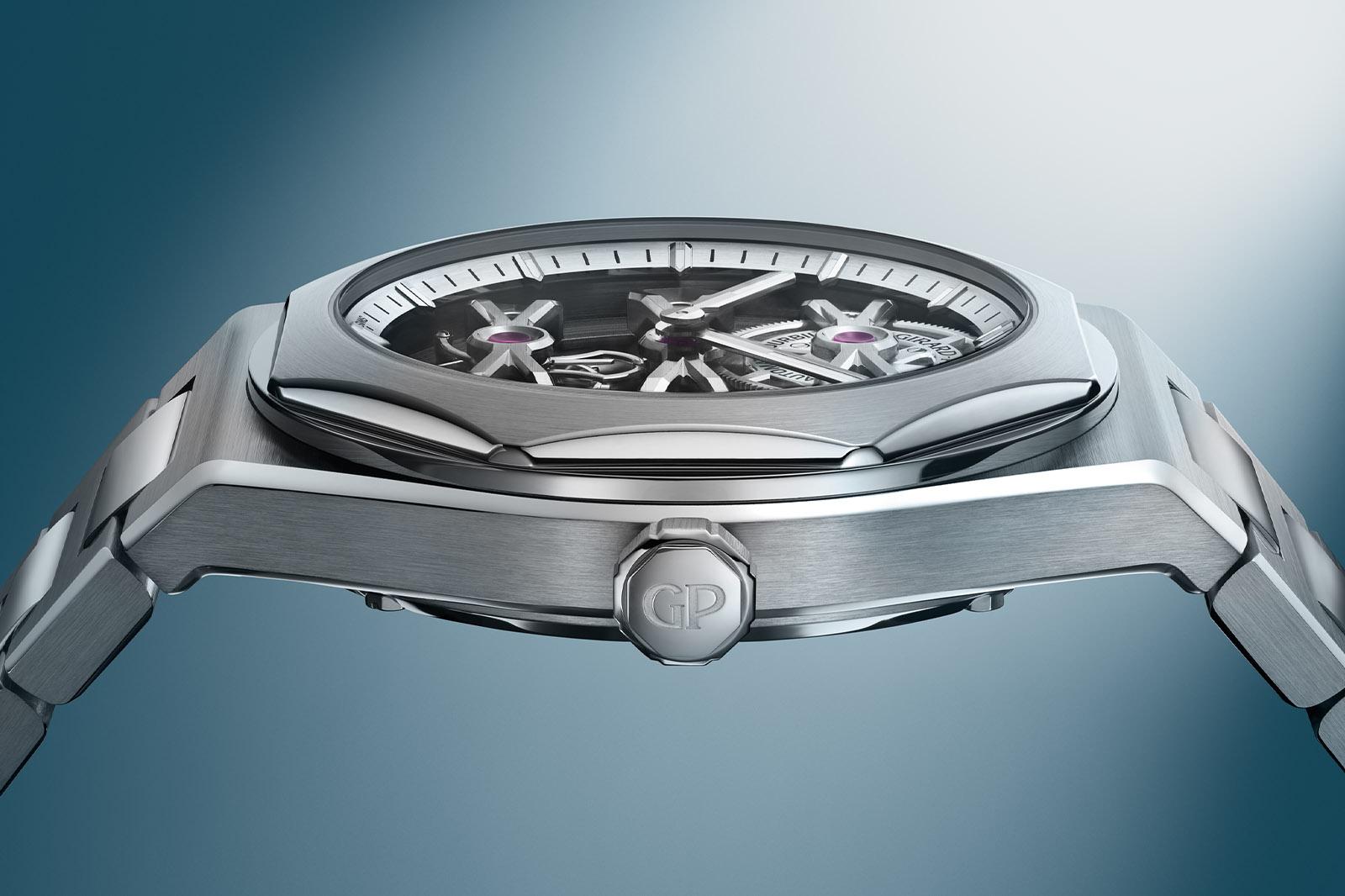
The case measures 41mm in diameter in stainless steel with a white gold octagonal bezel, which actually sits between the more common 42mm and 38mm Laureato sizes. It uses the classic Laureato design with wide, flat surfaces and an integrated H-link bracelet. The white gold adds an extra degree of shine and lustre to the characteristic bezel. It also pairs with the white gold bridges of the display.
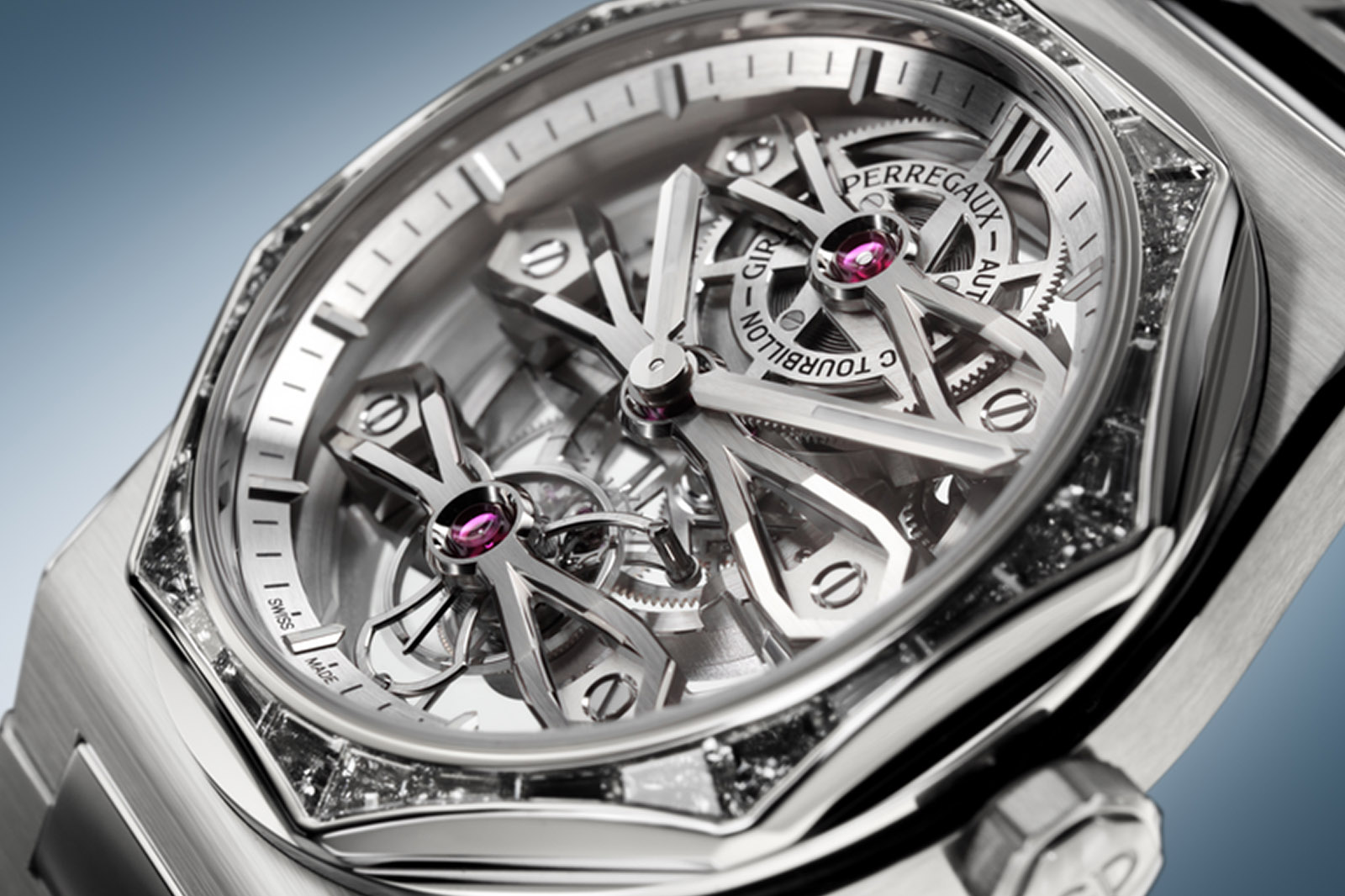
Structurally, the top bridge carries the platinum micro-rotor and power barrel, the centre bridge carries the gear train and central hands and then the bottom bridge supports the tourbillon. Having those core components arranged on a single vertical axis across the movement is pretty rare and is what makes the Three Bridges GP’s stand out haute horological collection. In order to fit the full bridge display including tourbillon into the Laureato, they had to develop yet another new movement.
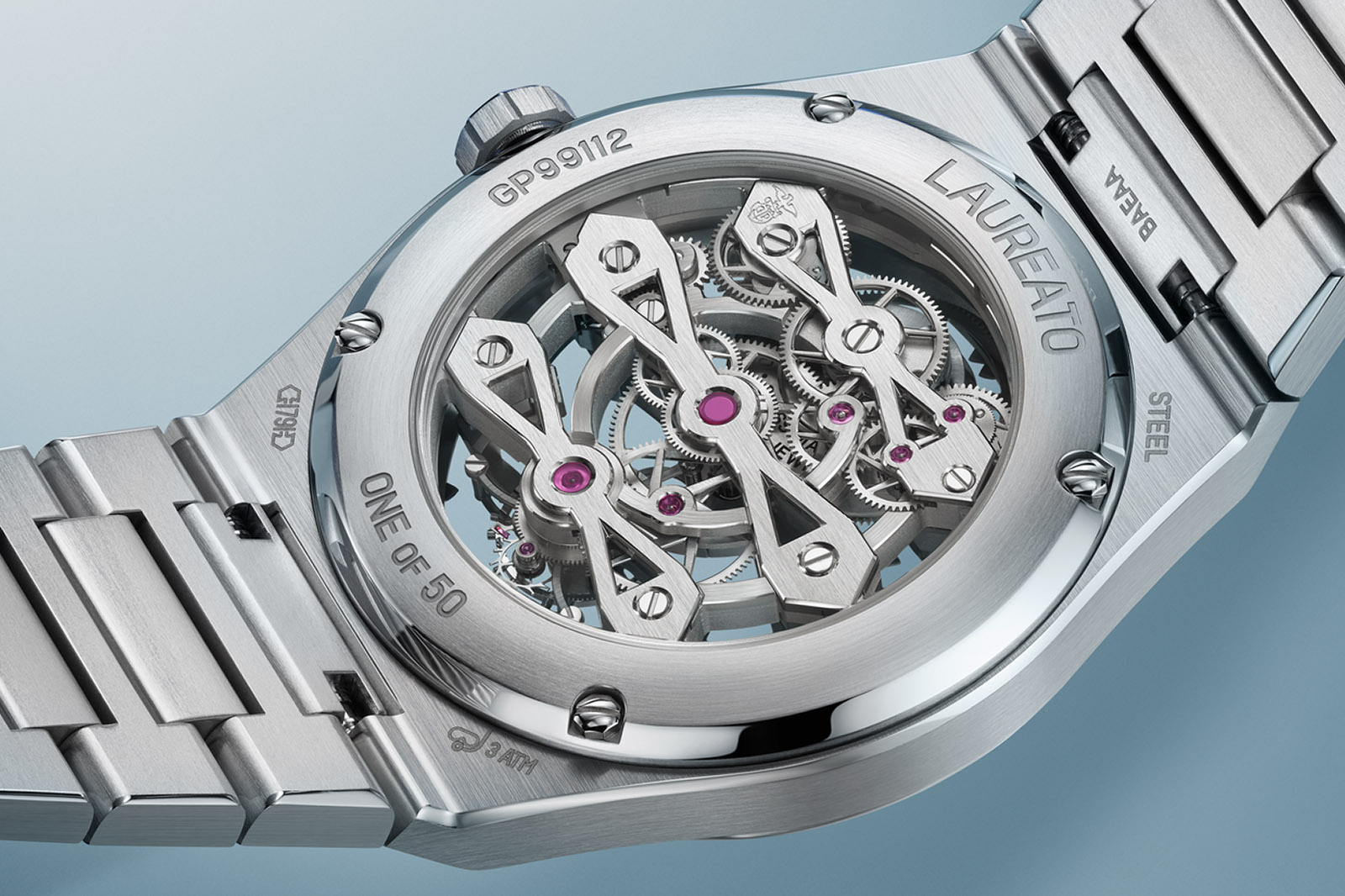
It’s called the GP09620-2206, and it’s an automatic movement with 55-hour power reserve. It’s composed of 303 components, built specifically for the suspended skeleton display. As you’d expect of a skeleton movement, every millimetre is finished to the nines with both straight line and circular hairline brushing, chamfered edges and polishing. As with many skeletonised displays it does struggle a bit with readability as the central hands tend to get lost among the architecture below, but at least the peripheral hour and minute scale is clear.
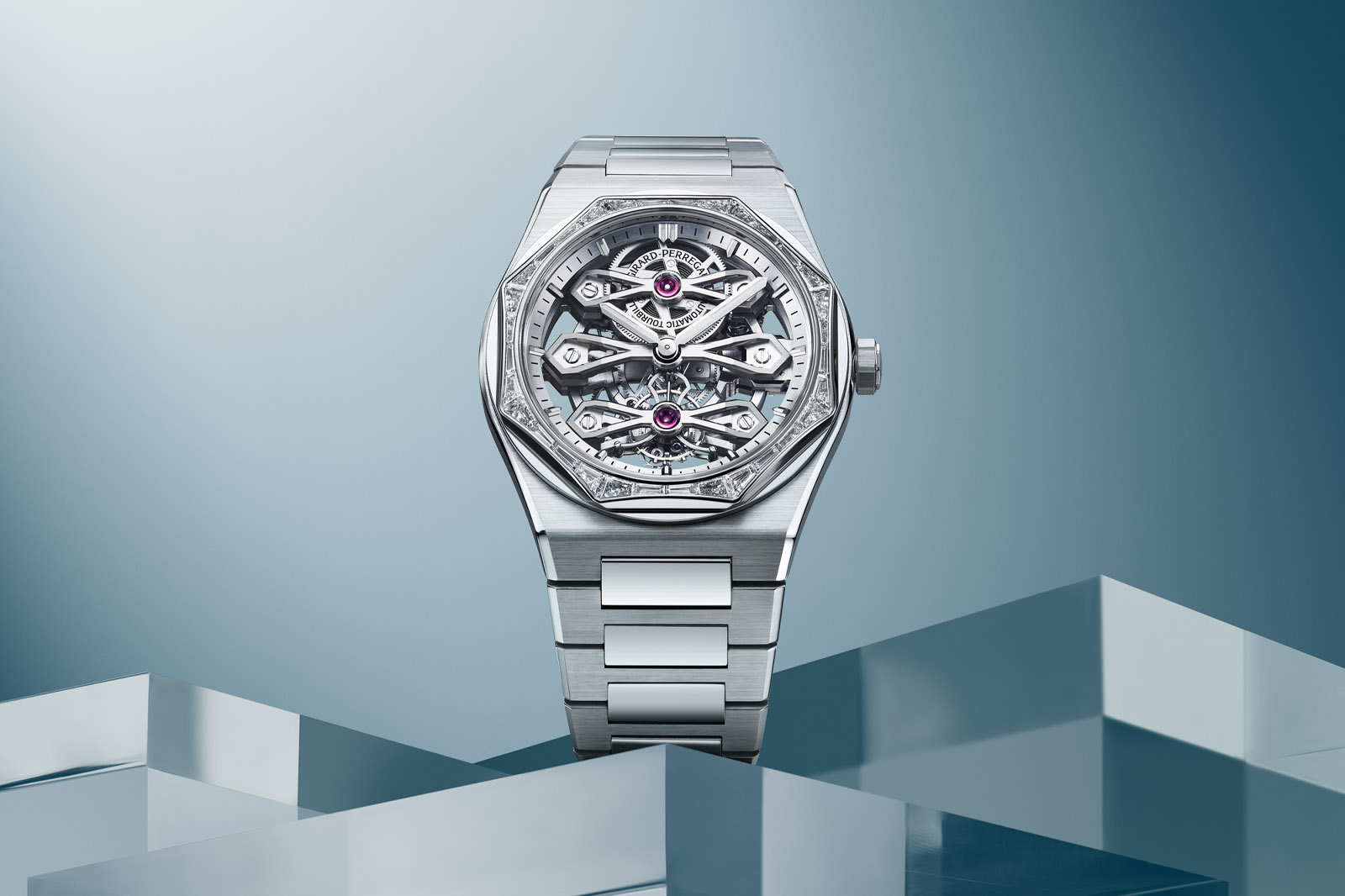
There are actually two versions of the watch being produced. The standard model is limited to 50 pieces at £144,000 while there’s also a diamond set bezel version that is non-limited, POA. It seems odd for the more exclusive version to be the non-limited edition but I suppose that they expect to produce them in very low quantities anyway so an artificial cap isn’t required. The next logical question is since we’ve had Aston Martin versions of the Three Bridges and Laureato, will we see an Aston Martin Laureato Three Bridges?
Price and Specs:
More details at Girard-Perregaux.


GP do produce some lovely watches, but this open work version is just too difficult to read the time. No doubt the cost would be too restrictive anyway.