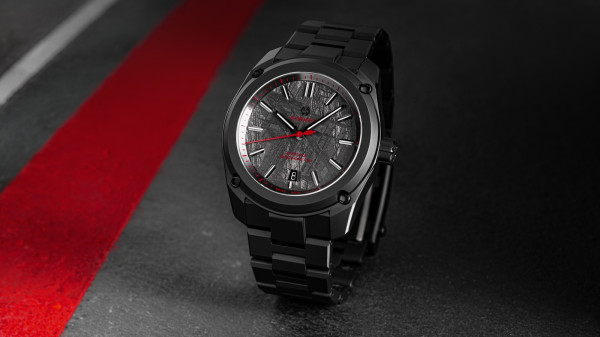
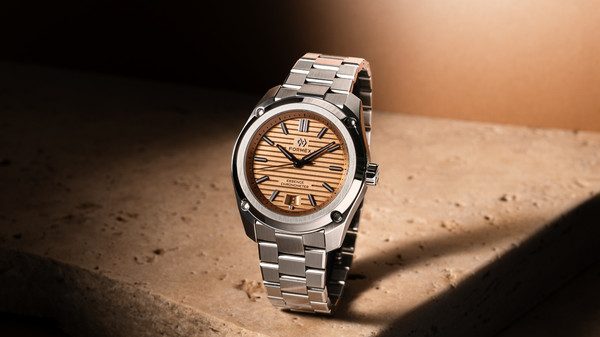
Dexel has been a player in Swiss parts-making for decades, but in the same way Japanese brand Minase went from tool-making to watch-making, Dexel wanted to broaden their horizons. At the same time, the Formex brand name was languishing in obscurity. The Granito family (yes, that sounds like off-brand mafia) saw an opportunity. Dexel gets a testbed to try out new ideas; Formex gets a level of R&D that most big groups could only dream of. Win-win.
That’s perhaps getting ahead of myself. At their core, Dexel is a specialist in bracelets and clasps. This is what they’re known for in the industry and for good reason. For obvious reasons I can’t share every name I saw being lasered into clasps. But I can say that Dexel had a stash of proprietary golds on hand. In fact, there’s not much they don’t have on hand.

Housed in their own building in Biel, Dexel’s built around a central parts repository that span the height of the building. Workers can punch in a code to summon a specific tray of parts wherever they are in the building. It’s not as futuristic as Omega’s robotic warehouse, but it doesn’t need to be. It’s more than efficient enough. Around this core are the various departments that make any manufacture run. Design, development, quality control in two or three iterations, testing (which we’ll get onto later) and, of course, the machines.
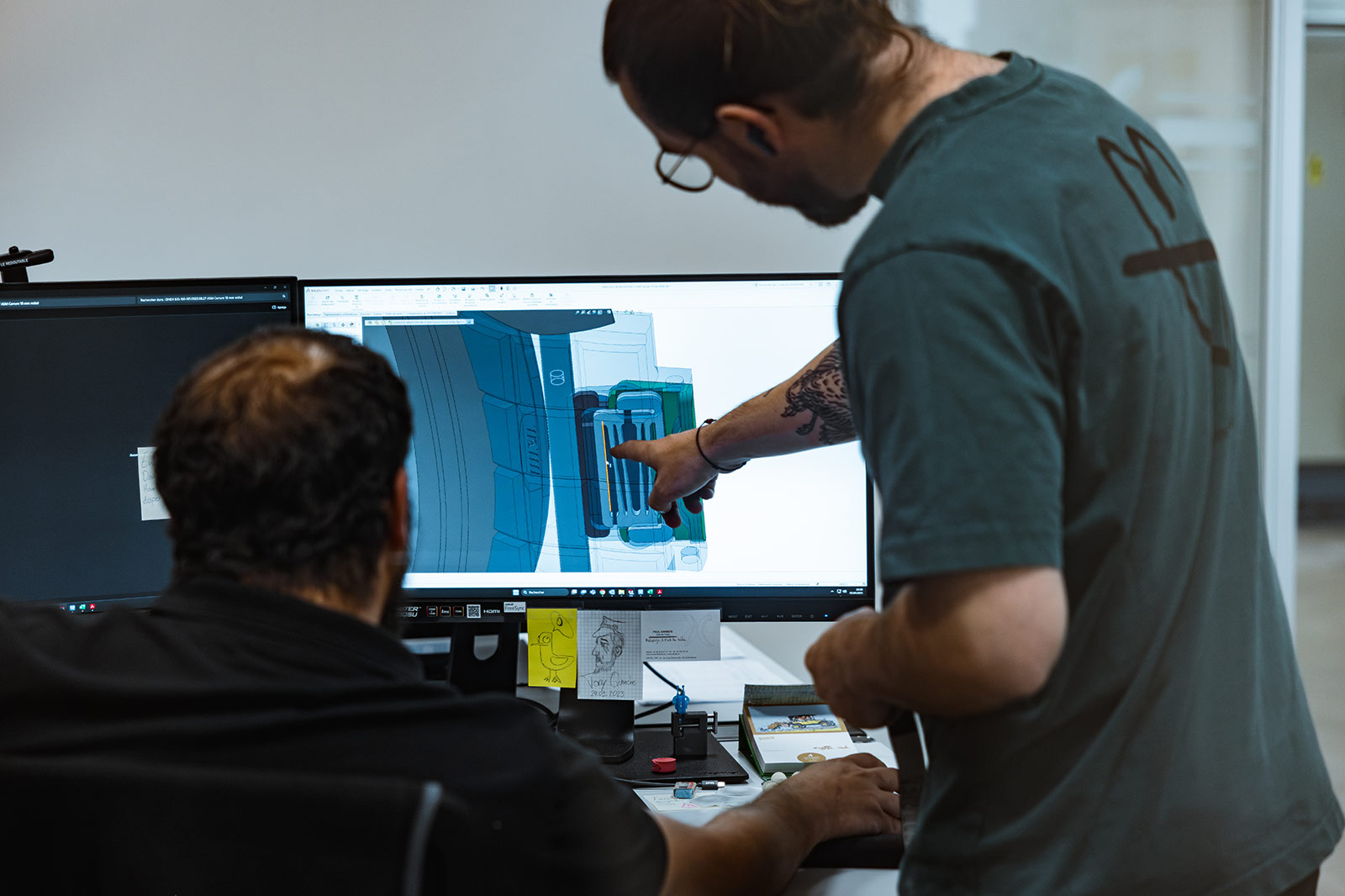
What’s striking about Dexel if you’ve done one or two of these visits before isn’t how many machines they have. Instead, it’s the sheer breadth. There are the usual polishing machines, unchanged since the 1970s; there are the big, CAD robots drenched in oil and metal shavings, the kinds of things that no manufacture can do without. But there’s also 3D printers whirring away prototyping parts, a giant laser to etch parts at a worrying pace and, most impressively, Dexel have the capacity to make their own ceramic.
Ceramic is hard, in more ways than one. It takes incredible heat to fire, diamond-tipped machines to mill and some serious prescience to make sure you can get from a powder to a finished product. It says a lot that this is just one string in Dexel’s overachieving bow.
Of course, all of this would be for nothing if the quality wasn’t there, which is why Dexel has multiple QC departments. There’s no point assembling a clasp if the parts are defunct, so everything gets checked multiple times. By eye, no less, a job that I can only imagine keeps the local optician in business. But for Dexel there’s not really another option because do you know who’s more demanding than you? The watchmaker with their name on the dial and laser-engraved into a Dexel clasp.

That said, everyone Dexel makes parts for has different ideas of what they want, different tolerances they have to build to. And because you can never trust the source, Dexel are required to send everything for third-party testing. Still, it always helps if they know it’s going to pass, so they have their own lab with a variety of horological torture devices that smash, twist and abuse every part of their work for days on end. It’s not a pretty sight.
This testing lab has another aspect too though. It means that Dexel can test out their own ideas to see how well they work. This is where Formex comes back in. Any time there’s a problem in one of their watches, they can put it through its paces to see what’s happening and come up with solutions. Pins in the bracelet getting stuck? Here’s a new way to machine the threads. Clasp not lasting the years it should? Here’s a way to reduce friction. It’s an R&D feedback loop that works on a timescale faster than I’ve ever seen before.

It has to be said however that despite the skills to create any bracelet (and these days cases) from raw materials to your wrist, scale is still small. I don’t mean because it was relatively empty while I was there – a mix of typical watch industry furlough and people taking Fridays off – but because you can see everything in about an hour. However, small as they are now (at least in the grand scheme of an overproducing watch industry), Dexel have big plans for the future. For one, they have an entire floor that’s empty, ready to be scaled up into as they grow. For another, they’ve moved fully into cases and are tentatively looking at movement finishing on the horizon. And honestly, if Formex ever takes off like they should, that extra floor will get filled up very, very quickly.

Dexel have enough customers that they could always stand by themselves without Formex. And Formex’s designs stand out, regardless of where the parts are made. But it’s the relationship between them that really matters, that feedback loop that makes for a watch brand with incredible technical agility and a field-tested manufacturer.
Oh, and if you ever do decide to visit Biel, the Granito family also has tendrils in an Italian eatery downtown that makes the best mozzarella focaccia you’ll ever have in your life. You’re welcome.
Find out more at Dexel.