
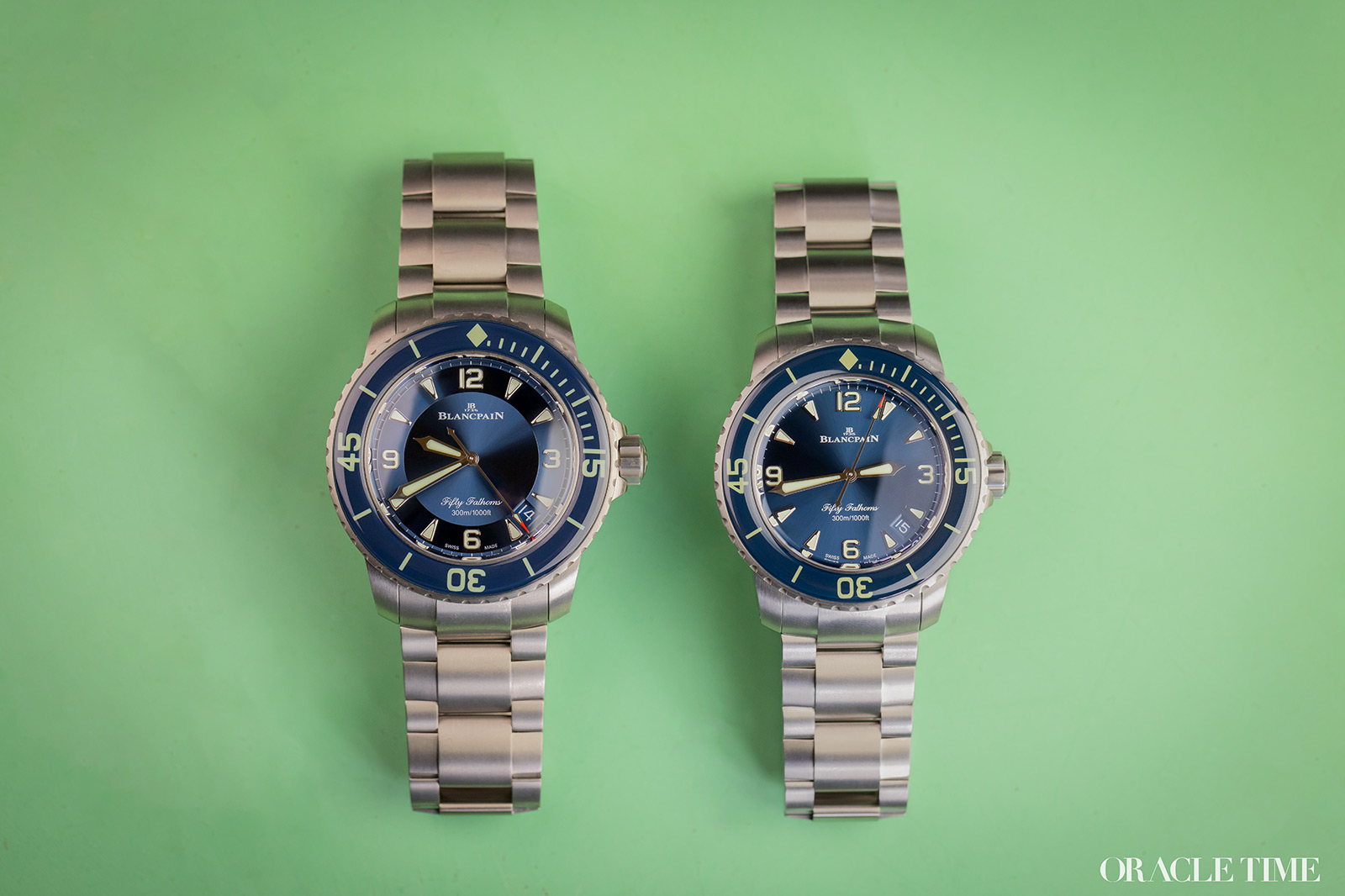
It’s all well and good talking about size trends in the watch industry but while on a surface level brands may be doing one thing, the buying habits of customers and collectors don’t necessarily have to translate the same way. Which is to say, in order to truly understand which watch size is the most popular, you have to look at the sales data. And we’ve done precisely that using Watchfinder & Co’s global report.
The report focusses on the 2024 period and tracks changes from 2023, so while it might not be indicative of this precise moment, it gives a good indication of where trends are heading. Starting with the most basic of figures, 41mm watches were the highest selling watch size in terms of quantity of sales in 2024, with 4,508 units sold. Closely followed by 40mm and 42mm. However, a static figure doesn’t demonstrate a trend.
From 2023-2024 the sale of 45mm watches dropped by 12% while the sale of 36mm watches rose by 47%. Overall, the average size of watches sold was 38mm, meaning that while 40-42mm were the most popular individual sizes, it was actually smaller watches that were more popular in order to bring that average down.

Omega Seamaster Aqua Terra Turquoise Ceramic Watch 38mm and 41mm
Looking specifically at pre-owned sales it’s estimated that small watches make up 10% of all sales. While that might seem like a small number, it shows a substantial increase of interest compared to previous years.
So, what is the answer to our question? The simplest answer is 41mm, a solid mid-ground size that’s suitable for everyone and works for wrists of most sizes. However, trends suggest that 38mm is where collectors are looking towards, something that is actually being reflected in the wealth of 38mm watches being launched this year.



Interesting review, but, I personally feel that to get a true picture of people’s preference in terms of watch size and trends going forward, the type of watch needs to be considered in the mix.
For a while now the trend has indeed been moving towards the slightly smaller size watch, this is shown in terms of makers latest offerings, with the actual sweet spot being identified as 39mm. BUT, it really depends on the type of watch, typically, a dress watch has always tended towards the smaller size (averaging 36mm) in order to slip under the cuff of a shift sleeve, whereas, sports and utility watches have tended towards the larger dimensions for very good reasons, if you are in a hurry or in wet conditions, then something legible is needed, this is evidenced by the massive dive watches reviewed in the last couple of months.
Regardless of trends, what is important is how the watch looks and feels on one’s wrist. However, the lack of watches available in 43-46mm size is noteworthy as these sizes are the ones most men with large wrists, and there are many, would want to wear. Time to go big!