

Stowa Building in Pforzheim
These days, a lot of collectors think of Glashütte as the cradle of German watchmaking. Why not? It’s home to Nomos Glashütte, Mühle Glashütte, and Glashütte Original. But that sleepy little Saxon village is late to the party compared to the historical home of German watchmaking in Pforzheim. And few watchmakers are as intertwined into the DNA of Pforzheim like STOWA.
Granted, STOWA didn’t start in Pforzheim. Originally founded in 1925 in Hornberg by Walter Storz (STOrz, WAlter), they moved to the town in 1935, and it wasn’t long before they started to make a name for themselves. At the time, the Bauhaus school had only just closed its doors and the design movement was still being felt—something that STOWA, alongside Lange & Söhne, incorporated into their early watches. While today that kind of contemporary minimalism is a signature of German watchmaking, back then it was anything but. STOWA were just (very far) ahead of their time.

STOWA Marine Observation Pocket Watch
Of course, the shadow that looms over all German watchmaking meant that in 1939, STOWA began building Flieger watches for the Luftwaffe—one of only five brands to do so. In case you were wondering, the others were IWC, Laco, Wempe, and Lange & Söhne, so they were in some serious company.
The Flieger was a far cry from STOWA’s minimalist, Bauhaus watches, but was actually well within their wheelhouse. Earlier, in 1939, they had started producing the Marine observation watch—essentially a marine chronometer in pocket watch form, designed to be accurate and easy to read at a glance, both things that were vital in a military context.
And so, their take on the Flieger was big, bold, and eminently legible, with a larger crown for operation while wearing flight gloves and all the key characteristics of a great pilots’ watch. It was available in two versions: Baumuster A and Baumuster B, depending on whether there was a chapter ring for minutes or not. Essentially, if you’re a fan of the typically German Flieger pilot’s watch design, you have a lot to thank STOWA for.

STOWA Flieger Original, based on the Flieger’s from the 1930s
Like most German watchmaking, 1945 was not a good year for STOWA—although their issues were slightly more spectacular than others when their manufacture was bombed. Needless to say, they moved quickly, specifically to nearby Rheinfelden, from where they expanded dramatically.
Aside from some shifts behind the scenes—Werner Storz taking over from his father Walter in 1960—the next big step in STOWA’s history came with the STOWA Seatime. In the early 1960s, dive watches were the shiny new thing and many of today’s most iconic models found their footing. While the Seatime never reached the heights—or depths, perhaps—of the Submariner or Fifty Fathoms, it still remains a classic of the era.
STOWA may have survived literal bombshells, but the biggest metaphorical one came in the late 1970s and ’80s with the quartz crisis. They survived a lot better than most, as they never actually stopped production, but by the mid-90s they were struggling to stay relevant in a market that had, in many ways, moved on. Or had seemed to, at least.
One person who didn’t think so was Jörg Schauer, who in 1996 took over the watchmaker from Werner Storz with a new vision—or perhaps a revival of an old one. Before every major watchmaker in the world started raiding their archives, he had the idea to plumb STOWA’s impressive horological history for inspiration. He did so with their 70th anniversary Pilot, a model true to their Flieger heritage—and that was just the start.

STOWA Antea KS Roségold (1937)

Shortly after, he introduced the Antea, a watch that riffed on STOWA’s early Bauhaus-inspired pieces—white dials with bold, typographic numerals and interesting indexes, sometimes in colour. With their straight lugs and pitch-perfect minimalism, they could have been ripped straight out of a late 1930s catalogue. In fact, according to Antea designer Hartmut Esslinger, that was the whole point.
“It had to be a cool interpretation of both the original design by Lange & Söhne (1937) and the Antea by STOWA (1937). I left the stainless steel case of the Antea Klassik. The dial with the modern Bauhaus STD type by Ed Benguiat and Victor Caruso creates a historical original with its sensitive aesthetics. The colours STOWA offers are a tribute to Josef Albers and Johannes Itten, because Bauhaus should not be seen only in black or white.”
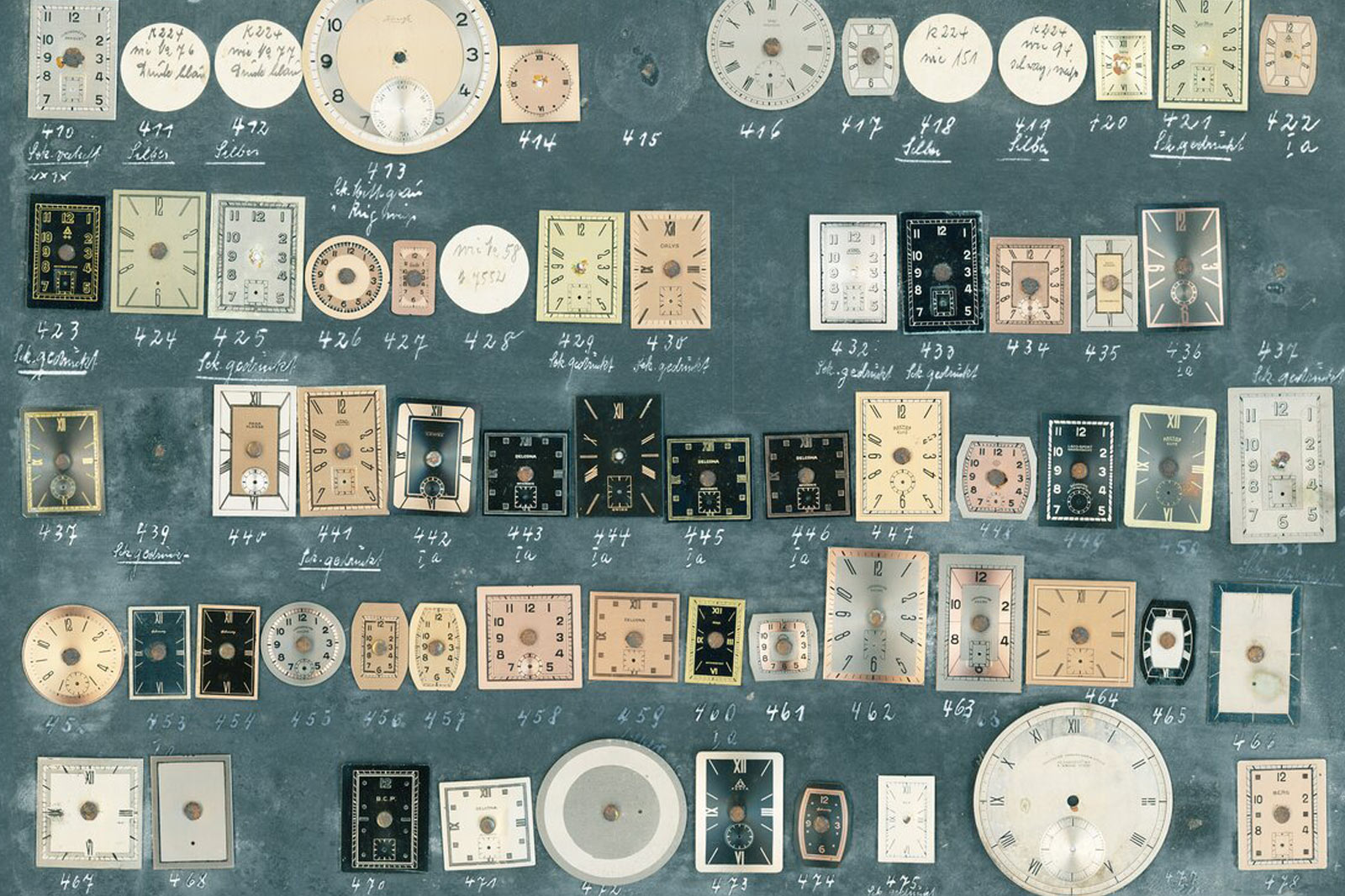
It’s not just Fliegers and Bauhaus either. That early Marine observation pocket watch has been turned into a fully-fledged collection of nautically inspired watches. Think crisp white dials, classical blued hands, and Roman numerals. Speaking of the ocean, the Seatime too is part of STOWA’s modern collection, albeit under the guise of the Prodive—its spiritual successor.
Indeed, as many watchmakers still scrabble to find cool, archival watches to dust off and bring out, STOWA’s entire modern identity is one that highlights the best beats from their history—and the broader story of German watchmaking. And yes, they do still have a head office in Pforzheim. Because Glashütte might get a lot of credit, but we all know where German watchmaking really lives. Or at least, now we do.
More details at Stowa.

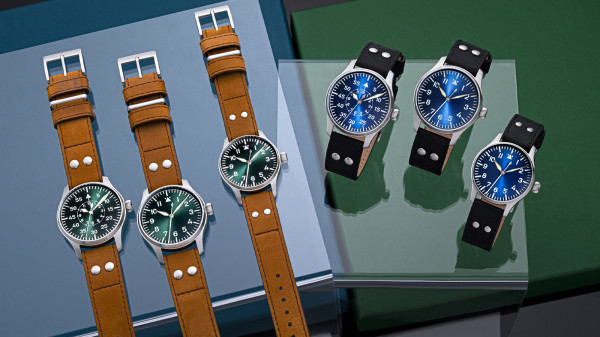

I have one of what is believed to be just 42 Stowa Baumuster B watches made before the factory was bombed. I have had it sympathetically restored and for an 85+ year old watch it holds surprisingly good time.
Phorzem deserves that mention here as well as Schauer who has actually resurrected old mechanisms and added elan and new achievements to these old souls of time keeping. It’s the best of the past linked with the full analog ability of a brave new future.
Hi, it is Baumuster not master. Also the supplied link leads to “Towa”.
Hi Nils,
Great spots! These have now been updated.
Best,
Michael